
VIP member
Product details
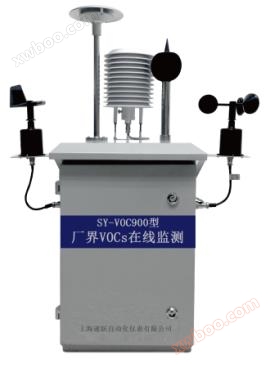
Factory VOC alarm system
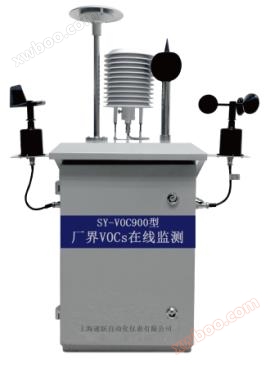
Introduction to Factory Voc Alarm System Products
Overview:
The VOCs online monitoring system designed by our company meets the following requirements:
1. Build a VOCs "point, surface, and mobile" monitoring network to incorporate VOCs pollution monitoring in industrial parks into daily supervision and management.
Building a comprehensive and three-dimensional VOCs monitoring system that combines point based factory boundaries, industrial parks, and mobile devices, with enterprises as the unit, to understand the pollution discharge situation of each enterprise and the overall environmental situation of the industrial park, track and monitor in a timely manner, and supervise and guide enterprises to meet pollution standards.
2. Enterprise boundary characteristic pollution monitoring stations, with no less than 4 points set up, including 1 automatic monitoring station set up at the edge of the boundary in the downwind direction of the dominant wind direction and the second dominant wind direction, and automatic monitoring stations set up at the edge of the boundary near residential areas and crowded areas.
3. Establish a data transmission system for each automatic monitoring point, equipped with data collection devices, and networked with the Municipal Environmental Protection Bureau. Data transmission complies with national regulatory requirements
Install multiple automatic monitoring stations in each enterprise, establish an internal LAN, and connect data to the Environmental Protection Bureau separately.
The factory VOC alarm system measures VOCs, meteorological parameters (temperature, humidity, air pressure, wind speed, wind direction), and can also be optionally equipped with PM2.5, PM10, hydrogen chloride, methyl mercaptan, hydrogen sulfide, sulfur dioxide, ammonia, etc; Data collection and communication controllers can accurately and reliably monitor the concentration of pollutants in the surrounding air environment.
System composition:
The gaseous pollutant module includes VOCs, meteorological parameters (temperature, humidity, air pressure, wind speed, wind direction), and optional PM2.5, PM10, hydrogen chloride, methyl mercaptan, hydrogen sulfide, sulfur dioxide, ammonia, and data acquisition and output modules.
Working principle and characteristics:
Optimize design and configure reasonably based on requirements and environmental conditions.
A three-level progressive filtering device has been designed, using mode filtering with accuracies of 5 μ m, 2 μ m, and 1 μ m. It is easy to maintain and ensures that the gas sensor can work stably and measure accurately;
For water vapor in the air, our patented spiral steam water separator can effectively remove water vapor
The system is equipped with many sensors such as humidity sensors, flow rate sensors, and pressure sensors to monitor the operation in real time, ensuring the stability of the equipment and the work of the university.
The system output is equipped with MODBUS communication, analog signals, Ethernet and other communication.
Equipped with GPRS module, it has remote diagnosis and calibration functions, reducing manual maintenance in the later stage and increasing the stability and reliability of the system.
It has functions such as data comparison, processing, automatic calibration, range setting, and over limit alarm interlocking.
The system is controlled by a microcontroller and equipped with intelligent analytical instruments. It has a high degree of automation, low maintenance workload, and fast and convenient data processing
The system has added GFC data cross interference compensation function to ensure measurement accuracy!
Add solar panels and lithium batteries, with a maximum working time of 2 weeks (optional)
Meteorological 5 parameters
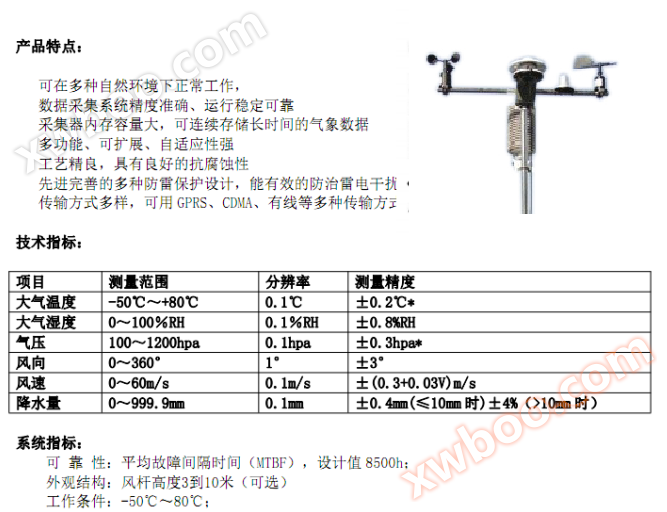
Technical Specifications:
Gas detection |
Volatile Organic Gases (VOCs) |
|
Detection Principle |
PID principle, sampling method, long-term continuous operation. |
|
measurement range |
0-200, 2000, 10000ppm optional |
|
Resolution |
0.025ppm(0~200ppm); 0.05ppm(0~2000ppm); 0.1ppm(10000ppm) |
|
repetitiveness |
≤± 3% (calculated as isobutene) |
|
zero drift |
≤ 2 mg/m3 (calculated as isobutene) |
|
response time |
≤ 20 seconds (T90) |
|
Determination of lower limit |
≤ 5 mg/m3 |
|
Actual gas sample comparison error |
≤ 50% (VOCs≤15 mg/m 3 ) |
|
≤ 35% (VOCs>15 mg/m 3 ) | ||
recovery time |
≤ 10 seconds |
|
data collection |
tablet |
2-channel RS232/RS485 communication interface, Windows XP operating system |
system software |
Online monitoring and management software for pollution sources |
|
output |
RS232/RS485 signal output, Ethernet output, alarm port output |
|
working power supply |
220V AC/50Hz 0.5KW |
|
Working temperature and humidity |
5~40℃、≤85%RH |
|
Online inquiry
-
Contacts
-
Company
-
Telephone
-
Email
-
WeChat
-
Verification Code
-
Message Content
-